

Florida practitioner guide
Florida Expert Testimony and Digital Evidence Authentication
Two questions decide whether digital evidence carries weight in a Florida courtroom: is the exhibit what you say it is, and does the expert opinion behind it survive a Daubert challenge. This guide maps both to the Florida Evidence Code and to the examination record that answers them.
Updated November 3, 2026
(786) 219-121024/7: (800) 868-8189
Florida litigators meet digital evidence at two gates. Authentication asks whether a text thread, an email, a spreadsheet or a video is what its proponent claims. Admissibility of the expert opinion asks whether the examiner reasoned from enough data, with a reliable method, applied reliably to this matter. Both gates are decided on the record the examiner builds long before the hearing, which is why we build it from the first acquisition.
Global Digital Forensics was founded in 1992. Our experts have testified in federal and state courts and our work has been accepted by courts. What follows is how we prepare a Florida matter so the foundation is already in place when opposing counsel files the motion.
1. Daubert Governs Expert Opinions in Florida Courts
On May 23, 2019, the Florida Supreme Court adopted the Legislature's 2013 amendment to section 90.702 as a procedural rule of evidence in In re Amendments to the Florida Evidence Code, No. SC19-107, and Florida state courts have applied the Daubert standard since that decision. Federal courts sitting in Florida apply Federal Rule of Evidence 702, which since December 1, 2023 requires the proponent to show the court that it is more likely than not that the testimony meets each reliability element. A forensic opinion prepared for one forum therefore needs to hold up under the same reliability questions in the other. [2] [9]
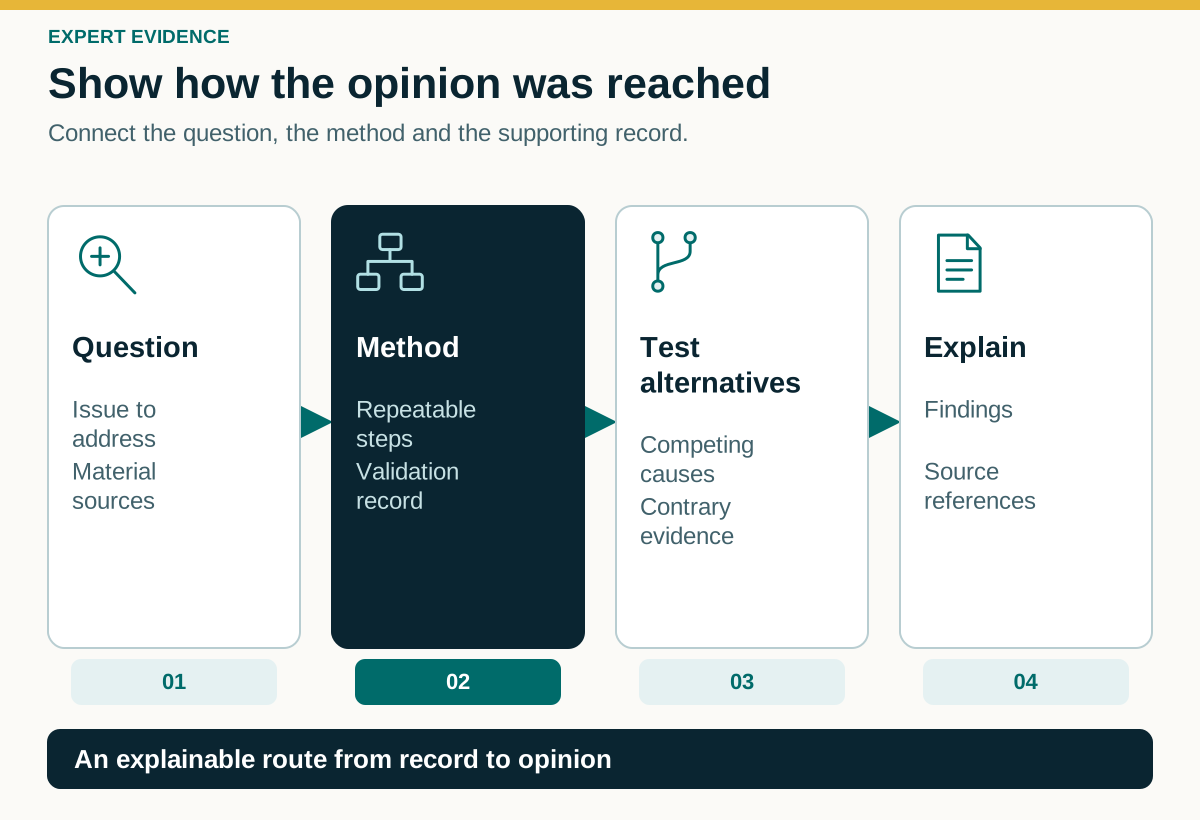
The practical consequence is that the method has to be on paper. A Daubert motion attacks the steps between the evidence and the conclusion, so our reports name the tools and versions used, the validation behind them, the artifacts relied on and the alternatives we tested and ruled out.
2. Three Reliability Tests Every Forensic Opinion Must Pass
Section 90.702 permits a witness qualified by knowledge, skill, experience, training or education to give an opinion that will help the trier of fact, if the testimony is based upon sufficient facts or data, is the product of reliable principles and methods, and reflects a reliable application of those principles and methods to the facts of the case. [1]
For a computer or phone examination, sufficient facts or data means the acquisition covered the sources the opinion depends on and the report says exactly which devices, accounts and date ranges were examined. Reliable principles and methods means tested tools, documented procedures, hash verification of every image and a method another qualified examiner could repeat. Reliable application means the notes show each inference: which registry key, log entry, database record or file system timestamp supports each finding, and why a competing explanation does not fit. That three part structure is the outline of every expert report we prepare for a Florida court.
3. Authentication Starts With What the Proponent Claims
Section 90.901 makes authentication a condition precedent to admissibility and is satisfied by evidence sufficient to support a finding that the matter in question is what its proponent claims. The claim defines the proof. A screenshot offered as a message from the defendant needs evidence tying the account, the device and the content to that person; a video offered as an unaltered recording of an event needs evidence about the recording device, the export path and the integrity of the file. [3]
We authenticate from the source wherever we can. A full extraction of the phone, the native email with its headers and server records, the original camera export with its container metadata and the hash values recorded at acquisition give the court a foundation in the native record itself. When only a copy survives, we document where it came from and what corroborates it.
4. Business Records Certified Under Section 90.902(11)
Florida lets a party authenticate a business record without a live custodian. Under section 90.902(11), an original or a duplicate of evidence admissible under section 90.803(6), maintained in a foreign country or a domestic location, is self authenticating when it comes with a certification or declaration from the custodian or another qualified person that the record was made at or near the time by or from a person with knowledge, was kept in the course of regularly conducted activity and was made as a regular practice of that activity, under penalty of criminal law for a false certification. [4]
The certification route has its own procedure. Section 90.803(6)(c) requires the offering party to serve reasonable written notice on every other party and make the evidence available for inspection early enough to allow a fair challenge; for records maintained in a foreign country in a civil case, the notice is due 60 days before trial. A motion opposing admissibility must be made and decided before trial, and failing to file one waives the objection unless the court grants relief for good cause. Carrier records, cloud provider exports and bank data often travel this route, so we identify every third party record early and tell counsel which certifications to request. [5]
5. Florida Has No Counterpart to Federal Rules 902(13) and 902(14)
In federal court, Rule 902(13) covers records generated by an electronic process or system shown to produce an accurate result, and Rule 902(14) covers data copied from an electronic device, storage medium or file and authenticated by a process of digital identification such as a hash value, each by certification of a qualified person with the notice required by Rule 902(11). [9]
Section 90.902 lists twelve categories of self authenticating evidence, and machine generated records and hash verified copies reach the court through the two routes that follow. In Florida state court, the examiner's testimony about the acquisition, the hash comparison and the custody record carries the foundation for a forensic copy, or the record must fit the business record certification of 90.902(11). We write the acquisition record with that testimony in mind, so the examiner who takes the stand can walk the court from the original device to the exhibit. [4]
6. Originals, Duplicates and Printouts of Computer Data
Florida's best evidence provisions recognize electronic records directly. Section 90.951 treats any printout or other output readable by sight as an original when data are stored in a computer or similar device and the output is shown to reflect the data accurately. Section 90.953 admits a duplicate to the same extent as an original unless a genuine question is raised about the authenticity of the original, admitting the duplicate would be unfair, or the writing is a negotiable instrument, security or similar writing evidencing a right to payment of money of the kind the statute lists. [6] [7]
Those rules reward a defensible acquisition. When opposing counsel raises a genuine authenticity question, the forensic image and the native file let the court resolve it on the evidence rather than on competing printouts. Preserve the device, the account and the native export, and keep every printout tied to the record it came from.
7. Prepare the Expert Disclosure Before It Is Requested
Under Florida Rule of Civil Procedure 1.280(c)(5), a party may require by interrogatory the identity of each expected trial expert, the subject matter, the substance of the facts and opinions and a summary of the grounds for each opinion, and a disclosed expert may be deposed without a court order. The rule also permits discovery of the expert's scope of employment and compensation in the case, general litigation experience including the split of work for plaintiffs and defendants, other cases in which the expert testified within a reasonable period, and an approximation of the expert's involvement as a witness. [8]
We prepare that information with the report so the disclosure date never becomes the first time the opinion is written down. A report organized around the three elements of 90.702, with the materials examined listed and every exhibit traced to its source, is the same document that answers the interrogatory and anchors the deposition.
Put the Foundation in Place Before the Motion
Call us when a key exhibit exists only as a screenshot or a forwarded copy, when the other side has questioned authenticity, when a third party holds the records you need certified, or when the expert disclosure deadline is approaching. A free consultation with a senior examiner covers each digital exhibit, the authentication route that fits it, the acquisition each exhibit calls for and the timeline to a report that meets section 90.702.
Call the Miami office at (786) 219-1210 or the 24/7 hotline at (800) 868-8189, or write to info@evestigate.com. Requests and case assessments are handled in confidence. To keep preparing, read the Florida law guides in our library.
Florida Matter Intake Checklist
Work through these questions with your team before the first call. Short answers are enough; the examiner will use them to map each exhibit to its foundation.
Note who controls each password, recovery key or unlock code, and share the completed checklist through the secure method agreed on the first call.
- Which court is the matter in, and what are the expert disclosure and hearing dates?
Florida state court applies sections 90.702 and 90.901 through 90.902; federal court applies Federal Rules of Evidence 702, 901 and 902. Note any scheduled Daubert hearing, the expert disclosure deadline and the trial date.
Answer:
Who confirmed it, from which record, and on what date:
- Which digital exhibits matter, and what is each one claimed to be?
List each message, email, document, recording or data set and the specific claim it supports, such as authorship, timing or that it is unaltered. The claim defines what authentication must prove.
Answer:
Who confirmed it, from which record, and on what date:
- Do you hold the original device, account or native file for each exhibit?
Record whether the source is a device in your custody, an account you control, a native export or only a printout or screenshot. Keep devices powered as they are and leave the files unopened for the examiner.
Answer:
Who confirmed it, from which record, and on what date:
- Which records are held by a carrier, cloud provider, bank or other third party?
These may be authenticated by a custodian certification under section 90.902(11) with the written notice of section 90.803(6)(c). Note who holds them, the date range and whether a subpoena or request has been sent.
Answer:
Who confirmed it, from which record, and on what date:
- Has the opposing party challenged authenticity or signaled a Daubert motion?
Note any objection, deposition question, expert report or motion that attacks an exhibit or a method, and the date it was served.
Answer:
Who confirmed it, from which record, and on what date:
- Who collected or examined the evidence before now, and how?
Record any earlier collection, the person who performed it, the tools used and whether hash values or notes exist. Earlier handling is part of the foundation record.
Answer:
Who confirmed it, from which record, and on what date:
- What opinions does the expert need to support?
Write each proposed opinion in one sentence, for example that a file was copied to removable media on a given date. The examiner will tell you which sources each one requires.
Answer:
Who confirmed it, from which record, and on what date:
Florida Statutes, Rules and Sources
Sources checked November 3, 2026.
- 1: Fla. Stat. 90.702, Testimony by experts (2026 Florida Statutes)
- 2: The Florida Bar News, Supreme Court replaces Frye with Daubert in evidence rules (In re Amendments to the Florida Evidence Code, No. SC19-107, May 23, 2019)
- 3: Fla. Stat. 90.901, Requirement of authentication or identification (2026 Florida Statutes)
- 4: Fla. Stat. 90.902, Self authentication (2026 Florida Statutes)
- 5: Fla. Stat. 90.803, Hearsay exceptions, including (6) records of regularly conducted business activity (2026 Florida Statutes)
- 6: Fla. Stat. 90.951, Definitions of writings, recordings, originals and duplicates (2026 Florida Statutes)
- 7: Fla. Stat. 90.953, Admissibility of duplicates (2026 Florida Statutes)
- 8: Florida Rules of Civil Procedure, October 1, 2026 edition (The Florida Bar)
- 9: Federal Rules of Evidence, December 1, 2025 edition, Rules 702, 901 and 902 (United States Courts)