

Mobile Device Forensics
Smartphones hold more relevant evidence than almost any other digital artifact in modern litigation and corporate matters. We recover messages, chats, location history, deleted content and application activity from iPhones, Android devices, tablets and wearables, and produce court-admissible reports and testimony for attorneys and insurance carriers across Miami-Dade, Broward, Palm Beach and the Southern District of Florida.
Why Mobile Device Evidence Matters
The average smartphone user sends dozens of messages, makes multiple calls, shares location data and interacts with cloud-connected applications every day. That continuous stream of activity creates a detailed record of communications, movements, relationships and decisions that is often far more comprehensive than anything found on a desktop computer. In civil litigation, insurance defense, corporate matters and criminal defense, mobile device data has become a primary category of digital evidence.
The challenge is that mobile devices are not designed with forensic access in mind. Modern iPhones and Android flagships implement full-disk encryption, secure enclave processors and sophisticated boot verification that can make unauthorized data access effectively impossible without the correct credentials or specialized forensic techniques. A defensible examination requires the right tooling, documented methodology and an examiner who can explain what was recovered and how, on cross.
Types of Evidence on a Mobile Device
A modern smartphone is the single richest source of personal digital evidence a party is likely to produce. Even after a user has cleared visible history, the operating system, individual apps and the file system retain a layered record of activity that a properly executed forensic examination can recover, correlate and present. The categories below represent the most common evidence types recovered in matters we handle, typically preserved together so timelines can be reconstructed from multiple independent sources on the same device.
| Item | What It Delivers |
|---|---|
| SMS, MMS and iMessage: | Sent and received messages with timestamps, phone numbers, thread continuity and read receipts, including messages the user deleted from their inbox that remain in device databases and unallocated storage. |
| Chat and messaging apps: | WhatsApp, Signal, Telegram, Facebook Messenger, Instagram DMs, Snapchat and Discord conversations recovered from application databases, cache files and backup archives, along with voice notes, images, video attachments and group membership history. |
| Call logs and voicemail: | Incoming, outgoing and missed calls with duration, phone number and, where available, cellular tower or Wi-Fi calling record, along with voicemail audio and transcripts. |
| Location and movement history: | GPS coordinates embedded in photos and videos, application location logs from mapping and rideshare apps, Wi-Fi and Bluetooth connection history, and system-level records such as the iOS Significant Locations database and Android location history that place a device at specific coordinates and times. |
| Search history and browsing activity: | Web searches, autocomplete entries, browser history, bookmarks, cached pages and downloaded files across Safari, Chrome and other browsers, including private-browsing artifacts that remain in device caches and DNS records. |
| Email and calendar: | Messages from native mail clients and cached content from webmail, along with calendar entries, meeting invitations and reminders that establish scheduling and intent. |
| Photos, videos and media: | Camera roll contents with EXIF metadata (timestamp, GPS, camera model), deleted media recoverable from unallocated storage, screenshots, screen recordings and document scans. |
| Application activity and usage: | Which apps were opened and when, notification history, in-app actions logged by the operating system, and system event logs that show how the device was actually used across a period of interest. |
| Financial and transaction records: | Cached banking activity, peer-to-peer payment records from Venmo, PayPal, Cash App and Zelle, cryptocurrency wallet artifacts, and purchase confirmations from retail and food-delivery applications. |
| Contacts and account identifiers: | Address book entries, linked cloud accounts, saved sign-in credentials in the platform password manager, and device pairing records for vehicles, wearables and other Bluetooth accessories. |
| Cloud-synced data: | iCloud, Google Drive, OneDrive and application-specific cloud backups that often preserve deleted device content, along with carrier-side call detail records obtained through appropriate legal process. |
Each of these categories is documented with the extraction method used, the tool and version applied, hash values confirming acquisition integrity, and the specific location within the device from which the data was recovered. That documentation is what allows the evidence to survive challenge under cross-examination and Daubert scrutiny.
How the Extraction Actually Works
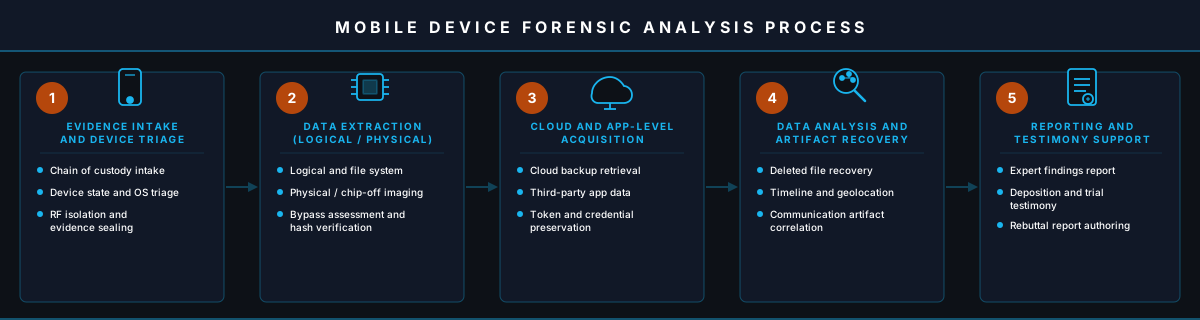
No single extraction method works for every device and every matter. The examiner selects the appropriate tier based on device model, operating system version, security configuration and the scope of evidence needed.
Logical extraction pulls data through the device’s standard APIs: contacts, call history, messages the operating system chooses to expose, and application data that has been made accessible through backup interfaces. This is the least invasive method and works on most locked and unlocked devices, though it leaves the deepest content untouched.
File system extraction captures the full application data layer including the underlying SQLite databases behind most messaging and social apps. This is where deleted messages, thread continuity, group membership history and application state actually live. On modern iOS devices this requires jailbreak-adjacent access; on Android it requires ADB and, for many devices, custom recovery.
Physical extraction produces a bit-for-bit image of the device’s storage, including unallocated space where deleted content persists until overwritten. On locked or damaged devices we perform chip-off extraction: desoldering the flash package and reading it through a hardware programmer, then reconstructing the file system from the raw dump.
Our examiners work with Cellebrite UFED, Magnet AXIOM, Oxygen Forensic Detective and MSAB XRY, selecting the platform that produces the most complete result for each device and firmware combination. Where a party has attempted anti-forensic measures, factory reset, remote wipe, self-destructing message apps or user-controlled app encryption, we recognize those artifacts and document them as evidence in their own right, supporting spoliation motions and adverse inference arguments.
Remote acquisition where physical possession is not feasible
For matters where the custodian cannot deliver the device to the lab, where an ops trip to the custodian is not viable (cross-border, executive travel, fragile counterparty relationships), or where the scope calls for consent-based logical acquisition rather than a full physical extraction, we run remote acquisition through our in-house platform. An acquisition agent is shipped to the custodian, executed under written instruction on the device at the custodian’s location, and returned once the collection is complete. Where the client’s MDM supports the required content classes, we run the same acquisition through the MDM path instead. Full provenance and chain of custody are preserved in either mode. See Remote Acquisition for the full scope of our remote collection capability across cloud, computer and mobile endpoints.
How the Examination Reaches a Courtroom
The engagement runs in a defined sequence. On intake the device is isolated in a Faraday enclosure to prevent remote wiping or over-the-air changes, photographed, and logged with a written chain of custody. Acquisition follows the appropriate extraction tier; every step is hashed so the integrity of the evidence can be proven at every point. Analysis is scoped in writing with counsel so the examination stays focused on what the case actually needs. The report documents each finding with the technical basis, tools and versions used, limitations, and the exhibits a party would introduce, written to be read by a judge and cross-examined by opposing counsel. Cloud extractions, when authorized, cover iCloud, Google, Samsung and application-specific backups that frequently preserve content the device itself no longer holds. Carrier call detail records are pursued in parallel where the matter benefits from a device-independent record of communications.
On testimony, the analyst who imaged the device and interpreted the recovered data is the one who takes the stand. Cross-examination on mobile forensic evidence turns on device-specific detail, the specific extraction tier used and the artifacts each tier does and does not surface, and that ground can only be defended by the examiner who was inside the phone.
Where Mobile Evidence Decides South Florida Matters
Automotive and commercial vehicle accidents
Establishing whether a driver was on their phone, connected to the vehicle’s Bluetooth, or otherwise distracted at the time of a collision. Millisecond-level timeline reconstruction from application usage, screen state, notification history and paired-device records. We work with major carriers and defense counsel across Florida on commercial motor carrier, rideshare, delivery and passenger vehicle matters.
High-net-worth probate and estate matters
Asset tracing from decedents’ devices for undisclosed accounts, offshore holdings, cryptocurrency wallets and hidden business interests. Will contests and trust disputes where the phone’s messaging record establishes intent or capacity questions.
Departing-employee and trade-secret matters
iCloud photo uploads of internal documents, AirDrop transfers to personal devices, cloud-app activity in the days before departure, and outbound file activity that establishes what was taken and where it went.
Construction, engineering and land-use matters
Site-photo timelines with GPS metadata, project-management-app activity and messaging between principals about pending inspections or change orders. The location data alone frequently establishes who was on-site and when.
Equestrian industry matters
Sale disputes, medication and prohibited-substance allegations, and syndicate fights turning on messaging records, veterinary-app activity and photo/video metadata around competitions. We work regularly with counsel handling the Wellington-centered practice.
Standards and Standing
Our examiners hold Cellebrite Certified Mobile Examiner (CCME), Cellebrite Certified Physical Analyst (CCPA) and equivalent credentials from Magnet Forensics and MSAB. Every acquisition is validated against NIST SP 800-101 Rev. 1 guidelines and SWGDE best practices, and tool performance is documented against SWGDE minimum requirements for the specific device model and OS version involved. Reports are structured for authentication under Fla. Stat. § 90.901 and Federal Rules of Evidence 902(13) and 902(14). Chain of custody is documented from the first touch to the final production and is defended by the examiner who created it.
Last updated: September 4, 2026
Preserve the Phone Before Anything Else Touches It
Once a device is powered on and connected to a network, remote wipe and background sync can begin to change what is recoverable. If the case may turn on what a phone contains, isolate it and call us before it is examined by anyone else.
Mobile Forensics for South Florida Matters
A meaningful share of the phones we examine in South Florida hold evidence in Spanish or Brazilian Portuguese, and many are central to insurance defense, probate, employment and civil disputes across the Miami-Dade, Broward, Palm Beach and Monroe circuit courts. Our examiners work in both languages, and reports are structured so a certified translator can attest to a transcript without the underlying extraction being redone.
We perform physical, file-system and advanced logical extractions from iOS and Android devices, including handsets that are locked, water-damaged or physically broken, and recover deleted messages from write-ahead logs and unallocated flash without altering the acquisition hash. Sender numbers, IMEI parameters, transmission timestamps and delivery receipts are documented so a screenshot becomes admissible evidence, and photograph EXIF metadata is parsed to verify coordinates and capture times.
Recorded audio is screened against Florida’s two-party consent rule before it reaches a filing, and our reporting format is used regularly by South Florida counsel and insurance carriers handling commercial vehicle, employment and civil matters.